
Adapalene Vs Retinaldehyde: What to Pick for Your Skin

Retinoids are super-effective compounds with proven efficacy in advanced skincare therapy. Whether it is adapalene or retinaldehyde, each offers distinct pharmacological approaches to treating your skin concerns.
They work through different biochemical pathways to address common skincare problems and have different absorption parameters.
So, adapalene vs retinal: which one should you prefer? It depends on many factors, including your concern, skin type, the formulations, and more, which we will discuss in the blog.
How Adapalene Benefits You
Adapalene is an effective topical retinoid for treating acne vulgaris and ageing concerns. It is a third-generation retinoid that can regulate the skin cell turnover and reduce inflammation.
If your skin is sensitive, going for adapalene will leave no room for regrets. The most common uses of adapalene are;
- Treating acne vulgaris
- Treating psoriasis
- Healing inflammation associated with eczema
- Protection from sun damage and actinic keratosis
The phenomenon of increased cellular turnover can facilitate the shedding of dead skin cells, replenishing the skin's barrier and leading to soft, supple skin.
How Retinal Benefits You
Retinal, or commonly known as retinaldehyde, is another vitamin A derivative available over the counter, an affordable option primarily targeting ageing and acne concerns. It's mild on the skin and more efficient than retinol.
Retinaldehyde tends to penetrate deeper into the skin layers to make it look voluminous and youthful.
Furthermore, retinaldehyde is a remedy for breakout-prone skin, clears pores, and prevents acne blemishes. For sensitive skin types, retinaldehyde can be a better option, being gentler on the skin to treat conditions like rosacea, psoriasis, and melasma.
Also Read: Retinaldehyde for Sensitive Skin: Is It Really Gentle Enough?
How to Choose Between Adapelene and Retinal
Choosing between adapalene and retinaldehyde is contingent upon various factors, including your skin concerns, its tolerance, affordability, potential risks, and skin type.
Skin Concern & Type
Adapalene works well for frequent acne or acne-prone skin, as it can regulate the sebum production in the skin.
Retinaldehyde can show faster results in ageing, sensitive skin issues, and dryness and peeling.
People with sensitive skin may find adapalene harsh on the skin, being a strong exfoliating agent. However, both are retinoids, and even retinaldehyde is not well-tolerated by everyone. A patch test is necessary.
Tolerance Level
Another factor not to be ignored is your skin's tolerance to these skincare ingredients. If your skin is new to retinoids, retinal may feel gentler to start with.
You can increase your skin's tolerance to any of these ingredients by using them one to two times a week and then increasing gradually.
You can notice how your skin behaves and if it reacts. A low and slow approach can work for everyone.
Faster Results
Retinal or retinaldehyde simply takes a single step to get converted into retinoic acid. This makes it faster-acting than some other retinoids.
Can You Use Adapalene and Retinal Together
Using retinaldehyde and adapalene together makes no sense. Both are retinoids and can increase the risks of inflammation, skin sensitivity, and irritation.
These compounds together can contribute to promoting cellular turnover, and combining them can lead to peeling and redness, potentially over-exfoliating your skin and overwhelming its barrier.
If you are a beginner to retinoids or have sensitive or reactive skin, trying this combination can majorly impact your skin. It’s advisable to stick with one and be consistent to witness magical changes.
Adapalene Vs Retinal: Which is Better
Both adapalene and retinaldehyde can perform wonders for your skin problems if used correctly or as recommended by a medical practitioner. How well these ingredients work and which is better for you is certainly dependent upon various factors.
If you are struggling with types of acne, adapalene may work better for you. According to a study, adapalene is an FDA-approved ingredient for treating acne vulgaris. Retinaldehyde is mild for acne-prone skin and can serve as an option.
While adapalene may improve your skin's texture, retinaldehyde is a better option to deal with ageing issues and boosts collagen for a firm appearance.
Understanding Retinoids

Retinoids are vitamin A derivatives or chemicals derived from vitamin A. These compounds are more or less like vitamin A, either structurally or functionally.
While you can buy mild OTC forms to treat ageing concerns, like wrinkles, fine lines, and acne, strong forms can be obtained only through prescriptions given by your medical practitioner.
Retinoids include diverse types, such as retinol (the most popular), retinaldehyde, adapalene, and retinyl esters.
Retinoids can increase cellular turnover, regulate sebum production in your skin, and stimulate collagen production to target common skin issues, including ageing lines, sagging skin, post-acne hyperpigmentation, acne, and other signs of ageing.
The Science Behind Retinoids
Our skin has receptors, and retinoids work by binding to them, specifically. These receptors are crucial for skin behaviour, including controlling inflammation, skin thickening, and cell renewal. One is called retinoid acid receptors or RAR-α, β, γ, and the other one is retinoid-X receptors or RXR-α, β, γ.
How Adapalene Works
Adapalene is selective and binds to RAR-β and RAR-γ binding sites. Though the accurate mechanism behind this is yet to be studied, this collaboration makes it less irritating, even for reactive skin.
This tie-up to the binding sites helps to regulate cell differentiation in the skin, making it a great ingredient for acne treatment.
Also Read: Adapalene Vs Tretinoin: Comparing Them for Wrinkles, Uses, and Side Effects
How Retinaldehyde Works
Retinaldehyde is a precursor to retinoic acid, which makes it work faster than retinol. It requires a single step to become active. More potent than retinol, this vitamin A derivative binds to RAR-α, RAR-β, and RAR-γ and behaves as a remedial option for both anti-ageing and acne treatment.
After converting to retinoic acid, retinaldehyde interacts with retinoic acid receptors (RARs) to promote cellular turnover and collagen production.
Available Forms & Dosage
Adapalene
You can find adapalene in generic formulations or as Differin, suitable for dermatological applications in the following topical dosage forms;
- 0.1% topical cream or gel
- 0.1% topical lotion or solution
- 0.3% topical gel
If you want to buy an OTC adapalene, 0.1% is available without a prescription.
Retinal
Retinal is available over the counter in various formulations, making it easy to buy without a prescription. It's available in the following topical dosage forms:
- 0.01% to 0.1% cream or serum: commonly available concentrations in the market
- 0.25% cream or serum: ideal for beginners
- 0.50% cream or serum: for those who have built some tolerance
- 1% cream or serum: for advanced users
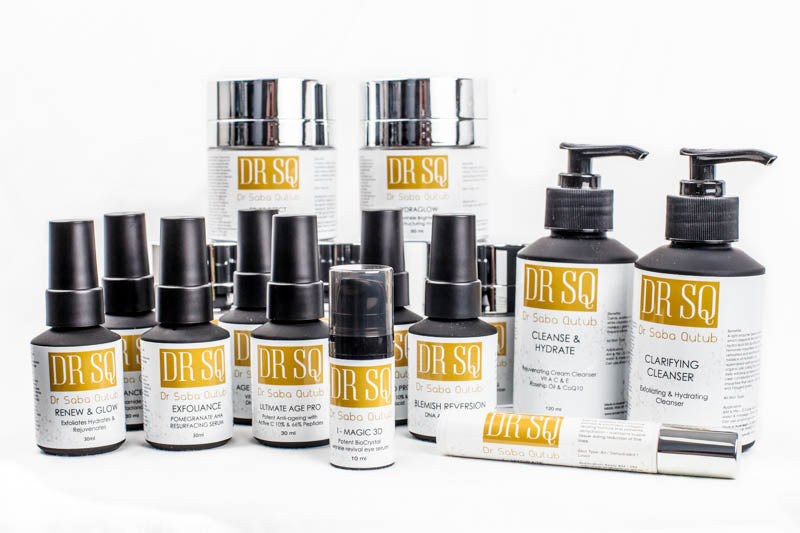
DRSQ Starter Vitamin A Serum with 0.25 is clinically proven to reverse the topical signs of ageing, including loose skin, fine lines, and wrinkles. It is indicated for the skin never been exposed to vitamin A before.

Potential Side Effects of Using Adapalene or Retinal
These potent retinoids may or may not suit your skin, especially in the beginning. The likelihood of reaction can vary from person to person or skin type. Some common side effects are;
- Itching
- Burning
- Sunburn
- Peeling and redness
- Dryness and roughness
If there are very few side effects, use moisturisers to combat them. Individuals with deep skin tones may develop pigmentation due to the constant irritation.
If not stopped immediately after seeing adverse side effects, one may get serious allergies and skin reactions, which require sincere and long-term medical attention. Some retinoids may induce discomfort near the thin-skinned eye area, resulting in dry eyes and itching.
Tips for Using Adapalene and Retinal
According to experts, adapalene and retinaldehyde can be introduced into your skincare with some precautions.
- Begin with a low concentration and use one to two times a week. Don't rush with your product, no matter how bad your skin concern is. Introduce the ingredient slowly so your skin can become habituated to the formulation.
- Always follow a proper and doctor-approved skincare routine. Be sure to cleanse your skin, apply the product, and follow up with a non-comedogenic moisturiser. You can try hyaluronic acid, ceramide, or aloe vera-infused moisturisers to soothe your skin.
- Don't combine adapalene or retinaldehyde with other ingredients without consulting your doctor. They will advise you after analysing your skin.
- Both adapalene and retinaldehyde may increase your skin's sensitivity towards the sun. Use an SPF to protect your skin. A broad-spectrum sunscreen with at least SPF30+ can shield your skin from harmful sunrays.
When to Avoid Retinoids
Though adapalene and retinaldehyde are highly effective and can impart major positive changes to your skin, people with certain scenarios should avoid either of them.
- Individuals with compromised skin barrier or extremely reactive skin should avoid using any of these ingredients, as they can contribute to increased sensitivity rather than doing any good.
- Pregnant women and breastfeeding mothers should not look up retinoids like adapalene or retinaldehyde, or at least consult their doctors before considering applying them.
- Some medical practitioners suggest avoiding using them as they can cause fatal harm by getting absorbed into your bloodstream.
- It's advised to keep your retinoids out of the reach of your children, especially those under 12 years of age, as they can be too harsh on their skin.
- If you are on certain medications, talk to your doctor if adapalene or retinaldehyde can be used on your skin.
- If you notice no results even after weeks or months of applying either of these retinoids, it's better to switch to another ingredient. Your doctor may recommend something else to treat your concern.
Key Takeaways
- Adapalene and retinaldehyde are retinoids but serve different purposes. Adapalene is more effective for acne-prone skin, while retinaldehyde can reduce signs of ageing.
- Adapalene is selective and binds to RAR-β and RAR-γ, which is why it is less reactive. On the contrary, retinaldehyde just needs one step to get converted into retinoic acid.
- It is not advisable to use adapalene and retinaldehyde together as they both are retinoids and exfoliants, and can increase the chances of skin irritation and peeling.
- Both of these can result in redness, inflammation, and itching if your skin is too reactive or the barrier is broken. Precautions are necessary. Ensure a patch test before use.
- Begin with a low concentration and increase slowly. Incorporate moisturiser and sunscreen to manage your concerns.
References:
- Melika Motamedi, Ahmad Chehade, Ravina Sanghera, Parbeer Grewal, "A Clinician's Guide to Topical Retinoids", 2022 Feb
- Sree S Kolli, Danielle Pecone, Adrian Pona, Abigail Cline, Steven R Feldman, "Topical Retinoids in Acne Vulgaris: A Systematic Review", 2019 Jun
- T Futoryan, B A Gilchrest, "Retinoids and the skin", 1994 Sep
- John Waugh, Stuart Noble, Lesley J Scott, "Adapalene: a review of its use in the treatment of acne vulgaris", 2004
- John Waugh, Stuart Noble, Lesley J Scott, "Spotlight on adapalene in acne vulgaris", 2004